A 2026 guide to teaching English in Tunisia: degree and TEFL requirements, how the work permit and carte de séjour work, salaries in TND and USD, top employers such as AMIDEAST, living costs in Tunis and step-by-step hiring advice.

Teach English in Tunisia 2026: Jobs, Salary & Requirements
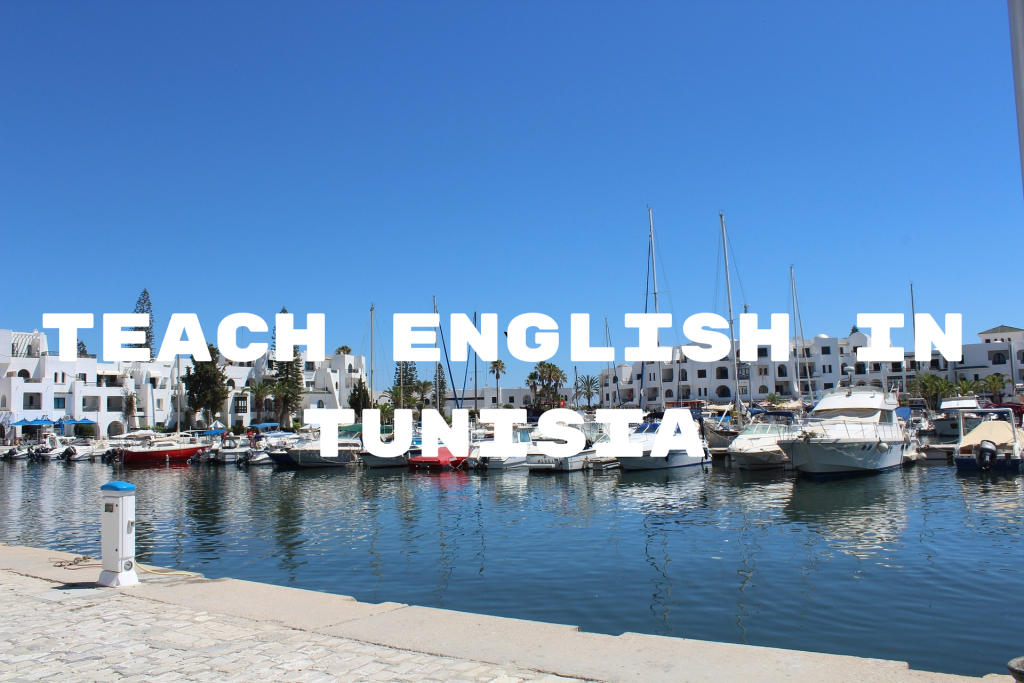
To teach English in Tunisia in 2026 you will usually need a bachelor’s degree, a 120-hour TEFL certificate and a local employer willing to sponsor your work permit. Pay at language schools is modest, about $500–$1,000 a month, but living costs are low and the country offers Mediterranean beaches, Roman ruins and a relaxed North African lifestyle. This guide covers requirements, visas, salaries, employers, living costs and how to get hired.
TL;DR
- Salary: about $500–$1,000 a month (roughly 1,500–3,000 TND) at language centres, often paid hourly; licensed teachers at international schools can earn around $2,000–$2,500 a month plus benefits.
- Requirements: bachelor’s degree in any subject, 120-hour TEFL certificate and native-level English; experience helps but is not always required.
- Visa: an employment contract approved by the Ministry of Employment plus a residence card (carte de séjour); many teachers arrive visa-free and their employer converts their status after hiring.
- Living costs: a single teacher in Tunis can live on about 1,250–1,650 TND ($420–$550) a month including rent.
- Verdict: best for adventurous teachers who value culture and low costs over savings; expect to break even unless you add private or online students.
Last updated: November 2026
You can enrol on any of the following TEFL courses:
Online Level 3 TEFL Certificate
Online Level 5 TEFL Diploma
Combined Level 5 TEFL Diploma
SAVE30
Bonus Code
Valid Until: Oct 27, 2024
Save up to 75% on 120 hour advanced TEFL course
Save up to 60% on 180 hour regulated level 5 tefl diploma
Save up to 56% on 310 hour hybrid level 5 advanced diploma
Big Savings On:
120 hour TEFL course
180 hour level 5 tefl diploma
310 hour hybrid level 5 advanced diploma
Table of Contents
- Is There Demand for English Teachers in Tunisia?
- What Are the Requirements to Teach English in Tunisia?
- How Do Visas and Work Permits Work?
- How Much Do English Teachers Earn in Tunisia?
- Types of Teaching Jobs and Where to Find Them
- Cost of Living in Tunisia for Teachers
- Pros and Cons of Teaching in Tunisia
- How to Get Hired: Step by Step
- Related Guides
- Frequently Asked Questions
- Conclusion
Is There Demand for English Teachers in Tunisia?
Yes, but it is a niche market. Tunisia is traditionally Arabic- and French-speaking, and English has gained ground as young Tunisians look for jobs in tech, tourism, call centres and international business. Adults and university students make up much of the demand, alongside children whose parents pay for after-school classes.
Most jobs are in Greater Tunis (including the Lac and La Marsa areas), with smaller markets in Sousse, Monastir, Sfax and Nabeul. Compared with neighbours such as teaching English in Morocco, there are fewer schools and fewer advertised posts, so many teachers find work by arriving and interviewing in person.
Hiring happens year-round, with the busiest window from about March to July for September starts and a smaller round for January. Activity slows during Ramadan and the main Islamic holidays.
What Are the Requirements to Teach English in Tunisia?
Requirements depend on the employer, but this is what most language centres and schools ask for in 2026:
- Degree: a bachelor’s degree in any field. Some centres prefer education, linguistics or English, and a master’s helps for university posts.
- TEFL certificate: at least 120 hours, ideally with an observed teaching practicum. CELTA, Trinity CertTESOL or a Level 5 TEFL make you more competitive. Our 120-hour TEFL course guide explains what employers expect.
- Nationality and English level: employers favour passport holders from the US, UK, Ireland, Canada, Australia, New Zealand and South Africa, though fluent non-native speakers with strong credentials are also hired.
- Experience: not always required at language centres; one to two years is preferred by established chains and is normally essential for international schools.
- Documents: degree, TEFL certificate, passport valid for at least six months, a clean criminal record certificate from your home country and a medical certificate for the residence card. Have degree and record certificates legalised or apostilled before you leave.
International schools that follow British, American or IB curricula want a teaching licence from your home country, usually with at least two years of experience.
How Do Visas and Work Permits Work?
Foreigners can only work legally in Tunisia with two things: an employment contract approved by the Ministry of Employment and Vocational Training, and a residence card (carte de séjour) that authorises paid work. The ministry approves foreign contracts when no Tunisian with equivalent qualifications is available, which is why native-level English and a TEFL certificate matter.
In practice the process usually runs like this:
- Enter Tunisia visa-free. UK, US, Canadian and most EU passport holders can visit without a visa for short stays (90 days for UK citizens); check the rules for your nationality.
- Interview and sign a contract with a school.
- Your employer submits the contract for ministry approval.
- You apply for a residence card at the police, first receiving a temporary card that lets you leave and re-enter while the final card is issued.
- Renew the contract and card each year. Since the 2023 Finance Law, foreign workers must show their tax affairs are in order to renew.
International schools and larger chains normally handle the paperwork for you. Smaller centres may offer cash-in-hand or freelance contracts without a permit; avoid these, as working illegally can lead to fines and deportation. For broader job-market and visa options, read our guide to working abroad in Tunisia.
How Much Do English Teachers Earn in Tunisia?
Salaries are low by international standards but cover a local lifestyle. Many language centres pay by the hour and hire teachers as independent contractors, so monthly income depends on your timetable. Figures below use an exchange rate of about 2.98 TND to the US dollar (November 2026).
| Job type | Typical pay | Approx. USD | Usual benefits |
|---|---|---|---|
| Private language centre (full-time timetable) | 1,500–3,000 TND a month | $500–$1,000 | Few; housing and flights rarely included |
| Hourly language centre teaching (e.g. AMIDEAST, British Council) | About 22–36 TND an hour (past advertised rates) | $7–$12 | Freelance contract, evening and weekend classes |
| Private tutoring | Set your own rate; often similar to centre hourly pay | Varies | None |
| International school (licensed teacher) | Around $2,000–$2,500 a month | $2,000–$2,500 | Often housing, flights and medical insurance |
| University posts | Varies by institution | Varies | Usually require a master’s degree |
Full-time timetables are typically 20–25 contact hours a week plus preparation. Most language school teachers break even rather than save, so many add private students or online classes. If saving money is your priority, compare the highest-paying TEFL countries first.
Types of Teaching Jobs and Where to Find Them
Private language centres
The largest employer group. AMIDEAST runs English programmes in Tunis, Lac II, Sousse and Monastir and has historically hired native or near-native instructors with a degree, a 100–120-hour TESOL or TEFL certificate and some classroom experience. The British Council Tunisia teaching centre also recruits hourly-paid teachers. Independent centres in Tunis, Sousse and Sfax advertise on local job sites and Facebook groups.
International schools
British, American and IB schools in Tunis offer the best packages but hire qualified, licensed teachers, usually through international recruitment platforms such as TES and Teach Away between January and April.
Universities, business English and tutoring
Private universities and business schools hire English lecturers, generally with a master’s degree. Corporate clients pay for business English, and private tutoring for exam preparation (IELTS, TOEFL) is common. You can also teach online alongside your local job; see the main types of TEFL jobs for options.
Where to search
- Employer career pages: AMIDEAST Tunisia and British Council Tunisia.
- Job boards: TES and Teach Away (international schools), Dave’s ESL Cafe, ESLbase and TEFL.com.
- Local sites and networks: Tanqeeb, Tunisian expat Facebook groups and LinkedIn.
- Walk-ins: dropping CVs at language centres in Tunis is still one of the most effective methods.
Cost of Living in Tunisia for Teachers
Tunisia is one of the cheaper Mediterranean countries, although inflation has pushed up food and rent in recent years. Typical 2026 prices in Tunis:
| Expense | TND per month | Approx. USD |
|---|---|---|
| One-bedroom flat, city centre | About 1,100 | About $370 |
| One-bedroom flat, outside centre | About 715 | About $240 |
| Utilities (electricity, water, gas) | About 200 | About $68 |
| Monthly public transport pass | About 50 | About $17 |
| Meal at an inexpensive restaurant | About 13.5 per meal | About $4.50 |
| Single person’s monthly spending excluding rent | About 540 | About $180 |
Budget about 1,250–1,650 TND ($420–$550) a month living alone, less if you share. Bring $1,000–$1,500 in start-up funds to cover a deposit, first month’s rent and living costs until your first pay cheque. Our guide to preparing to move to Tunisia covers housing, banking and healthcare in more detail.
Pros and Cons of Teaching in Tunisia
| Pros | Cons |
|---|---|
| Low cost of living and affordable rent | Low salaries; little or no savings |
| Beaches, Carthage, the Sahara and easy flights to Europe | Small job market with few advertised posts |
| Motivated adult and university learners | Freelance or part-time contracts are common at first |
| Chance to learn French and Arabic | Bureaucracy and annual permit renewals |
| Year-round hiring and in-person interviews | Flights and housing are rarely provided |
On safety, most teachers live in Tunis and coastal cities without serious problems. Governments including the US advise increased caution because of terrorism risk and warn against travel near the Libyan and Algerian borders, so check your government’s current travel advice. If you are weighing the region, compare Tunisia with teaching English in Egypt, which has a larger job market, or teaching English in Algeria.
How to Get Hired: Step by Step
- Get qualified: finish a 120-hour TEFL with a practicum, or a Level 5 course such as a 180-hour Level 5 TEFL to stand out.
- Prepare documents: apostille or legalise your degree and criminal record certificate, and renew your passport if it has less than a year left.
- Apply early: contact AMIDEAST, the British Council and independent centres between March and July, and apply to international schools from January.
- Fly in and interview: many centres prefer face-to-face interviews and a demo lesson, so plan to arrive in late August or early January.
- Check the contract: confirm hours, hourly or monthly pay, payment dates and that the employer will file your work contract and residence card.
- Settle in: open a bank account once you have your residence card, get a local SIM and learn basic French and Tunisian Arabic phrases.
Frequently Asked Questions
Can you teach English in Tunisia without a degree?
It is difficult. Most language centres, universities and international schools ask for a bachelor’s degree in any subject plus a 120-hour TEFL certificate, and a degree also helps your work contract get approved. Without one, your realistic options are informal private tutoring or teaching online, neither of which gives you legal residency.
How much do English teachers earn in Tunisia?
Language school teachers typically earn about $500–$1,000 a month, roughly 1,500–3,000 Tunisian dinars, often paid hourly at around 22–36 TND. Licensed teachers at international schools can earn about $2,000–$2,500 a month with housing and flights. Most language school teachers break even rather than save, so private lessons help.
Do I need a work permit to teach English in Tunisia?
Yes. Foreigners need an employment contract approved by Tunisia’s Ministry of Employment and a residence card (carte de séjour) that authorises paid work. Many teachers enter visa-free, get hired locally and let the employer file the paperwork. Working without authorisation risks heavy fines and deportation, so avoid cash-in-hand jobs.
When is the best time to find English teaching jobs in Tunisia?
The main hiring window runs from about March to July for September starts, with a smaller round for January. Language centres also hire year-round as student numbers change, but because most schools interview face to face, arriving in Tunis in late August gives you the best chance of quick offers.
Is Tunisia safe for foreign English teachers?
Most foreign teachers live in Tunis, Sousse and Sfax without serious problems, and petty theft is the most common issue. Governments such as the US advise increased caution because of terrorism risk, with stricter warnings for areas near the Libyan and Algerian borders. Check your government’s current travel advice before accepting a job.
Do I need to speak Arabic or French to teach English in Tunisia?
No. Classes are taught in English and employers do not require Arabic or French. Outside the classroom, though, Tunisian Arabic and French dominate shops, offices and paperwork, so learning greetings, numbers and basic French makes renting a flat, handling bureaucracy and building rapport with students much easier.
What is the cost of living for a teacher in Tunisia?
A single teacher in Tunis can live on about 1,250–1,650 TND ($420–$550) a month. A one-bedroom flat costs around 715 TND outside the centre and 1,100 TND centrally, utilities about 200 TND and a transport pass about 50 TND. Sharing a flat or living in Sousse or Sfax cuts costs further.
Conclusion
Teaching English in Tunisia suits teachers who want culture, sunshine and low living costs more than savings. Get your degree and TEFL in order, line up interviews for the spring and summer hiring season, and read our complete guide to teaching English abroad to compare Tunisia with other destinations.





Latest News
-
How to Prepare to Move to Egypt
7 months ago 212
-
A Complete Guide on How to Prepare for Moving to the Czech Republic
7 months ago 205
-
How to Prepare for Moving to the Dominican Republic
7 months ago 193
-
How to Prepare for Moving to El Salvador
7 months ago 198
-
How to Prepare for Moving to Cuba: A Complete Guide for Expats and English Teachers
7 months ago 253