Teach English in Kazakhstan in 2026: salaries in tenge and USD for language schools, international schools and NIS, degree and TEFL requirements, the work permit and visa process, cost of living in Almaty and Astana, and how to get hired.

Teach English in Kazakhstan 2026: Jobs, Salary & Requirements
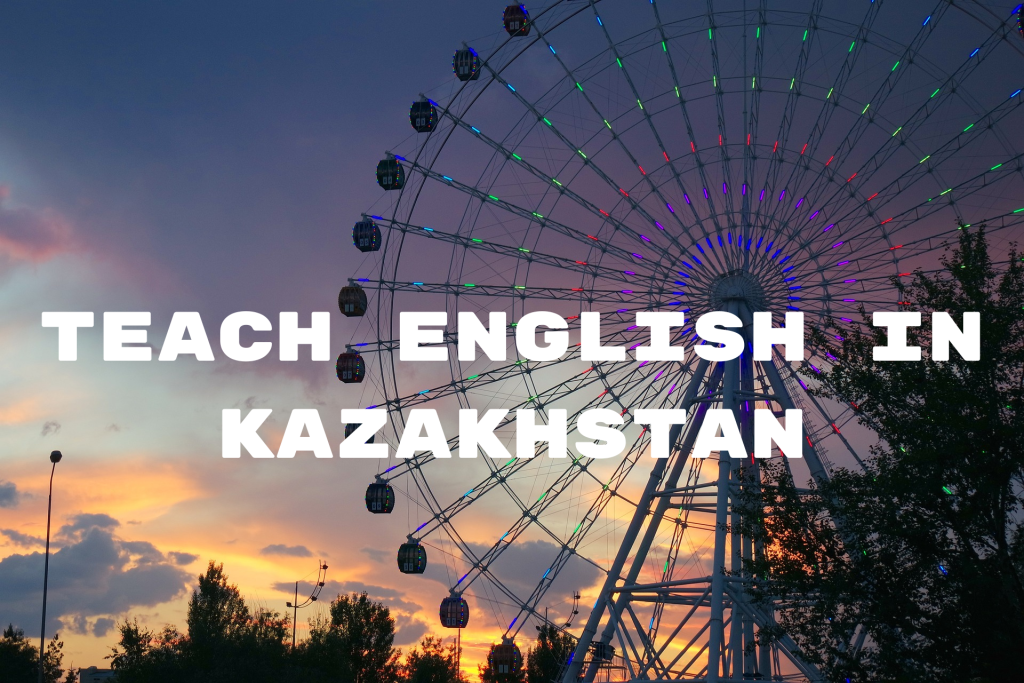
To teach English in Kazakhstan you typically need a bachelor’s degree, a 120-hour TEFL certificate and an employer who will sponsor your work permit and visa. Private language schools in Almaty and Astana are the easiest way in, while international schools and the state-funded Nazarbayev Intellectual Schools (NIS) pay far more to licensed, experienced teachers. Here is what pay, visas and daily life look like in 2026.
TL;DR
- Salary: about ₸220,000–₸650,000 ($490–$1,445) a month at language schools; ₸500,000–₸1,000,000 ($1,110–$2,220) at international schools; up to about ₸1.85 million ($4,100) at NIS.
- Requirements: bachelor’s degree, 120-hour TEFL and a clean criminal record check; NIS and international schools also want a teaching licence and around 3 years’ experience.
- Visa: your employer obtains a work permit (since September 2025 this includes a 15-day local job advert) and sponsors your work visa; visa-free entry does not allow you to work.
- Where: mostly Almaty and Astana (the capital, renamed from Nur-Sultan in 2022), plus NIS schools in regional cities and oil-town jobs in Atyrau.
- Verdict: a good-value, under-the-radar market for experienced teachers; newcomers can start in language schools but should expect modest pay and cold winters.
Last updated: November 2026
You can enrol on any of the following TEFL courses:
Online Level 3 TEFL Certificate
Online Level 5 TEFL Diploma
Combined Level 5 TEFL Diploma
SAVE30
Bonus Code
Valid Until: Oct 27, 2024
Save up to 75% on 120 hour advanced TEFL course
Save up to 60% on 180 hour regulated level 5 tefl diploma
Save up to 56% on 310 hour hybrid level 5 advanced diploma
Big Savings On:
120 hour TEFL course
180 hour level 5 tefl diploma
310 hour hybrid level 5 advanced diploma
Table of Contents
- Is There Demand for English Teachers in Kazakhstan?
- What Do You Need to Teach English in Kazakhstan?
- Kazakhstan Work Permit and Visa
- How Much Do English Teachers Earn in Kazakhstan?
- Types of Teaching Jobs and Where to Find Them
- Cost of Living in Kazakhstan
- Pros and Cons of Teaching in Kazakhstan
- How to Get Hired: Step by Step
- Related Guides
- Frequently Asked Questions
- Conclusion
Is There Demand for English Teachers in Kazakhstan?
Yes. Kazakhstan promotes a trilingual policy of Kazakh, Russian and English, and English is the language of instruction for many university programmes and for parts of the NIS curriculum. Oil, mining, finance and IT companies also pay for business English, and teenagers prepare for IELTS to study abroad.
Most jobs for foreign teachers are in Almaty, the largest city and commercial hub, and Astana, the capital. The school year starts in September, so schools recruit heavily in spring and summer, but private language schools hire year-round. Competition from other foreign teachers is lower than in East Asia, which helps first-time applicants.
Kazakhstan is the best-paid market in Central Asia. If you are comparing the wider region, look at teaching English in Mongolia or working in neighbouring Kyrgyzstan, where pay is lower but living costs are too.
What Do You Need to Teach English in Kazakhstan?
- Degree: a bachelor’s degree is needed for the work permit and visa and is listed by almost all employers. Universities usually want a master’s or higher.
- TEFL: 120 hours is the minimum most language schools ask for. Our 120-hour TEFL course guide explains what to look for.
- Experience: helpful everywhere and expected at international schools. NIS asks for a teaching qualification and at least 3 years’ experience since qualifying.
- Nationality: native speakers are preferred, and NIS recruits mother-tongue English speakers. Non-native speakers can find language-school work with a degree, TEFL, proof of proficiency such as IELTS, and experience.
- Background check: a clean criminal record check, usually apostilled or legalised, plus legalised copies of your degree.
You do not need to speak Kazakh or Russian to teach, but Russian is widely used in Almaty and Astana, so basic Russian makes daily life much easier.
Kazakhstan Work Permit and Visa
Citizens of many countries, including the US, UK, EU states, Canada and Australia, can visit Kazakhstan visa-free for short stays, but visa-free entry does not permit work. Paid teaching requires an employer-sponsored work permit and a work visa.
- Job offer and contract with a registered school or company.
- Labour market test: since 1 September 2025, employers must advertise the vacancy on the Electronic Labour Exchange for 15 calendar days and show no suitable local candidate applied. This adds at least 15 days to processing.
- Work permit: the employer applies through the migration.enbek.kz portal within Kazakhstan’s annual foreign labour quota.
- Work visa: with the employer’s invitation, you apply for a work visa (often called the C3 category) with your passport, contract, degree, TEFL certificate and criminal record check.
- Arrival: your employer handles migration registration; keep your documents with you.
Allow two to three months from offer to arrival. NIS and established international schools provide full visa support; with smaller language schools, confirm in writing who pays for the permit and visa.
How Much Do English Teachers Earn in Kazakhstan?
Pay depends heavily on employer type. USD figures use about ₸450 to $1, the late-October 2026 rate; the tenge has traded between roughly ₸439 and ₸513 to the dollar during 2026, so USD values move.
| Employer | Monthly salary (KZT) | Approx. USD | Typical benefits |
|---|---|---|---|
| Private language schools | ₸220,000–₸650,000 | $490–$1,445 | Visa support; housing help at some schools |
| International and private schools | ₸500,000–₸1,000,000+ | $1,110–$2,220+ | Housing or allowance, flights, health insurance |
| Nazarbayev Intellectual Schools (NIS) | Up to about ₸1,850,000 | Up to about $4,100 | Furnished flat with utilities, two return flights a year, medical insurance, settling-in allowance |
| Universities | Varies by institution | Varies | Often housing support; master’s degree usually required |
Older guides quoting $1,500–$3,000 for all teachers overstate entry-level pay: that range only applies to international schools and NIS. To see how Kazakhstan compares worldwide, read our guide to the highest TEFL salaries in the world.
Types of Teaching Jobs and Where to Find Them
- Private language schools: general, IELTS and business English for children and adults in Almaty and Astana; the most accessible jobs for new TEFL graduates.
- Nazarbayev Intellectual Schools: a nationwide network of selective state schools for gifted students, recruiting licensed English and subject teachers through agencies such as TIC Recruitment and Teach Away.
- International and private schools: British, IB and American-curriculum schools in Almaty and Astana, plus schools serving oil-industry families in Atyrau.
- Universities: English-medium universities and foundation programmes hire EAP lecturers with a master’s.
- Corporate classes: business English for energy, mining and finance companies, often through language schools.
Look for vacancies on Serious Teachers, TES, Teach Away, Dave’s ESL Cafe and local Facebook groups. Our guide to finding work abroad in Kazakhstan covers more job boards and non-teaching options.
Cost of Living in Kazakhstan
Living costs are moderate. Rent is the largest expense in Almaty and Astana, and Astana is slightly cheaper. Living outside the centre or sharing a flat can save around ₸100,000 ($220) a month.
| Expense | Monthly cost (KZT) | Approx. USD |
|---|---|---|
| One-bedroom flat, Almaty or Astana | ₸200,000–₸400,000 | $445–$890 |
| Living costs excluding rent | ₸250,000–₸350,000 | $555–$780 |
| Traditional restaurant meal | From about ₸4,000 | From about $9 |
A language-school salary at the lower end will be tight if you pay full rent, so prioritise jobs that include housing or an allowance.
Pros and Cons of Teaching in Kazakhstan
| Pros | Cons |
|---|---|
| NIS and international schools offer strong packages | Entry-level language-school pay is modest |
| Less competition than East Asian markets | Work permit now includes a labour market test |
| Mountains, lakes and skiing close to Almaty | Very cold winters, especially in Astana |
| Modern cities with good transport and apps | Russian is often needed outside work |
| Year-round hiring at language schools | Tenge exchange-rate swings affect savings |
How to Get Hired: Step by Step
- Get qualified: a degree and 120-hour TEFL for language schools; a teaching licence and experience for NIS and international schools.
- Prepare documents early: apostille or legalise your degree and criminal record check, as these take weeks.
- Apply in spring for September: schools and NIS hire ahead of the academic year; language schools hire year-round.
- Interview by video: expect a demo lesson or questions on classroom management and teaching teenagers.
- Check the contract: salary in KZT or USD, teaching hours, housing, flights, insurance and who pays visa costs.
- Complete the permit and visa: allow at least two months for the labour market test, work permit and visa.
Already teaching in South Asia? Experience from teaching English in India counts towards the classroom experience Kazakh international schools look for.
Frequently Asked Questions
How much do English teachers earn in Kazakhstan?
Private language schools typically pay ₸220,000–₸650,000 a month, about $490–$1,445. International schools pay around ₸500,000–₸1,000,000 or more, and Nazarbayev Intellectual Schools pay up to about ₸1.85 million, roughly $4,100, plus housing, flights and medical insurance for experienced, licensed teachers.
Do I need a degree to teach English in Kazakhstan?
Yes, in practice. A bachelor’s degree is required for the work permit and visa and is listed by almost all employers. Without a degree, your options are limited to volunteering or teaching online. Combine your degree with a 120-hour TEFL certificate to meet language-school requirements.
What visa do I need to teach in Kazakhstan?
You need an employer-sponsored work permit and work visa. Since September 2025, employers must first advertise the job locally for 15 days before applying for the permit on the migration.enbek.kz portal. You then apply for the work visa with your contract, degree and background check. Visa-free entry does not allow work.
What are Nazarbayev Intellectual Schools?
Nazarbayev Intellectual Schools (NIS) are a nationwide network of selective state schools for gifted students that teach partly in English. They recruit qualified international teachers with at least three years’ experience and offer some of the best packages in Central Asia, including a furnished flat, two return flights a year and medical insurance.
Do I need to speak Russian or Kazakh to teach English in Kazakhstan?
No. Classes are taught in English and employers do not require Kazakh or Russian. However, Russian is widely spoken in Almaty and Astana, so learning basic Russian makes shopping, transport and renting much easier. NIS even offers Kazakh and Russian language courses to its international teachers.
Which city is best for teaching English in Kazakhstan?
Almaty has the most language schools and international schools, a milder climate and mountains nearby. Astana, the capital, has government-linked schools and slightly cheaper rent but very cold winters. Regional cities host NIS schools, and Atyrau offers jobs linked to the oil industry, often with higher pay.
Conclusion
Kazakhstan rewards experienced, licensed teachers with some of the best packages in Central Asia, while newcomers can start in Almaty or Astana language schools. Line up your degree, TEFL and legalised documents, then use our complete guide to teaching English as a second language to plan your next move.





Latest News


-
How to Prepare to Move to Egypt
7 months ago 212
-
A Complete Guide on How to Prepare for Moving to the Czech Republic
7 months ago 205
-
How to Prepare for Moving to the Dominican Republic
7 months ago 193
-
How to Prepare for Moving to El Salvador
7 months ago 198
-
How to Prepare for Moving to Cuba: A Complete Guide for Expats and English Teachers
7 months ago 253