A 2026 guide to teaching English in the Czech Republic: 200–500 CZK hourly pay, TEFL and degree requirements, the Zivno trade licence vs the Employee Card, Prague living costs and where to find jobs.
To teach English in Czech Republic schools you need a TEFL certificate, native-level English and the right to work; a degree helps but most language schools do not legally require one. Language-school teachers typically earn 200–500 CZK an hour, or roughly 23,000–35,000 CZK ($1,050–$1,600) a month. Most non-EU teachers work on a Živnostenský list (trade licence), with the Employee Card as the alternative.
TL;DR
- Salary: 200–500 CZK per hour at language schools; about 23,000–35,000 CZK ($1,050–$1,600) a month full-time; international schools pay 55,000 CZK+ to licensed teachers.
- Requirements: 120-hour TEFL (or CELTA) and native-level English; a degree is preferred and required by public and international schools.
- Visa: EU citizens need no permit. Non-EU teachers usually get a Živno trade licence plus a long-term business visa, or an employer-sponsored Employee Card.
- Hiring: peaks in late August–September and January; Prague and Brno have the most jobs.
- Verdict: a great base in central Europe, but close to break-even in Prague unless you add private students.
Last updated: November 2026
Table of Contents
- Is There Demand for English Teachers in the Czech Republic?
- Requirements to Teach English in the Czech Republic
- Visa and Work Permit: Živno vs Employee Card
- English Teacher Salary in the Czech Republic
- Types of Jobs and Where to Find Them
- Cost of Living in Prague and Brno
- Pros and Cons
- How to Get Hired: Step by Step
- Related Guides
- Frequently Asked Questions
- Conclusion
Is There Demand for English Teachers in the Czech Republic?
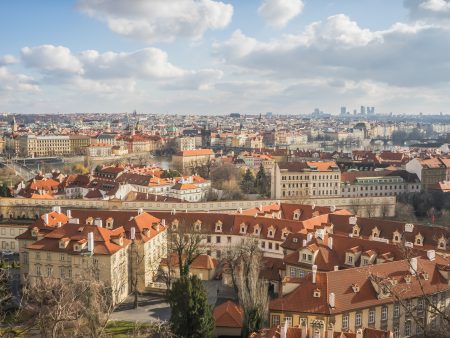
Yes. Czechia has one of central Europe’s most established TEFL markets, driven by multinational employers, outsourcing and IT firms, tourism and schools that want native-speaker teachers. Much of the work is business English: teachers travel to company offices to teach small groups of adults before and after the working day.
Prague has the largest market, followed by Brno, Ostrava, Plzeň and Olomouc. Smaller cities pay a little less but have lower rents and fewer competing teachers. For a wider view of how Czechia compares with other destinations, start with our complete guide to teaching English as a second language.
Requirements to Teach English in the Czech Republic
- TEFL certificate: the key requirement. Most schools want at least a 120-hour TEFL course, ideally with observed teaching practice; a CELTA or Level 5 TEFL helps with corporate clients.
- Degree: not legally required for most private language schools, though many prefer one. Public schools and international schools usually require a degree, and international schools also want a teaching licence.
- English level: native or near-native English. Non-native speakers may be asked for a C1–C2 certificate such as IELTS or Cambridge C2 Proficiency.
- Right to work: EU/EEA and Swiss citizens can start straight away. Everyone else, including UK citizens since Brexit, needs a residence permit that allows work.
- Documents: a criminal record check from every country you have lived in recently is needed for long-stay visa applications, plus apostilled documents with sworn Czech translations where required.
Visa and Work Permit: Živno vs Employee Card
A TEFL course does not give you a visa or legal stay on its own. Non-EU teachers normally choose one of two routes.
What is the Živnostenský list (trade licence)?
The Živno is the most common route for Americans and other non-EU teachers. You register as a self-employed person (OSVČ) in the free trade of education and lecturing, then apply at a Czech embassy or consulate for a long-term visa for business purposes. It lets you work for several schools and take private clients without one employer sponsoring you.
- Proof of funds: about 156,500 CZK in a bank account in your name (the figure is tied to the subsistence minimum and can change).
- Proof of accommodation in Czechia, usually a lease or the owner’s confirmation.
- Comprehensive travel health insurance for the visa, followed by public health insurance once you are registered.
- Letters of intent from two or three schools strengthen the application.
- Processing: plan for around 90–120 days; many teachers use a relocation agency to manage the paperwork.
Once you are working, you pay monthly social security and health insurance advances. Most teachers choose the flat-rate tax regime (paušální daň), whose first band costs 9,984 CZK a month in 2026 and covers income tax, social security and health insurance in one payment.
How does the Employee Card work?
The Employee Card (zaměstnanecká karta) is a combined residence and work permit tied to a specific employer and job, which must be advertised on the Labour Office’s vacancy register. It is more common at larger language schools and international schools that hire on standard contracts. The employer sponsors you, and changing jobs means reporting the new employer to the authorities.
For other legal work options and job search tips, see our guide to finding work abroad in the Czech Republic.
English Teacher Salary in the Czech Republic
Most teachers are paid per lesson or per hour, so monthly income depends on how many hours you fill. USD figures below use an exchange rate of about 21–22 CZK to the dollar (late 2026).
| Job type | Pay (CZK) | Approx. USD | Notes |
|---|---|---|---|
| Private language school | 200–500 per hour; about 23,000–34,000 a month full-time | $1,050–$1,550 a month | Usually freelance on a Živno; Prague pays more |
| Private one-to-one students | About 400–1,000 per hour | About $18–$46 per hour | Higher for exam prep and corporate clients |
| Public schools | About 30,000–35,000 a month (gross) | About $1,400–$1,600 | Degree usually required; often placed via AIA |
| International schools | 55,000+ a month | $2,500+ | Licensed, experienced teachers only |
Language schools do not usually provide flights or housing. Teachers who combine school hours with private students earn noticeably more. To see how this compares globally, read our guide to the highest TEFL salaries in the world.
Types of Jobs and Where to Find Them
Who hires English teachers in the Czech Republic?
- Private language schools: the largest employer, mostly teaching business English to adults in company offices.
- Public schools: agencies such as AIA (Academic Information Agency) forward teacher profiles to state schools, often outside Prague.
- International and bilingual schools: recruit licensed teachers, often via international recruitment fairs.
- Fellowships: US graduates can apply for the Fulbright English Teaching Assistant programme in the Czech Republic.
- Private students and online teaching: popular ways to top up income once you have a trade licence.
Which job boards list English teaching jobs in Czechia?
Search Jobs.cz and Expats.cz for local listings, Dave’s ESL Cafe and TEFL.com for international ads, and Facebook groups for Prague and Brno teachers. Hiring peaks in late August–September and again in January, but schools recruit year-round. Many in-person TEFL courses in Prague, including the International TEFL Academy’s Prague course, include local job-search help.
Cost of Living in Prague and Brno
A single teacher typically spends about 18,000–37,000 CZK ($800–$1,700) a month, with Prague at the top of that range. Budget for start-up costs too: visa fees, deposits and your first month before pay arrives often add up to several thousand dollars.
| Expense (monthly) | CZK | Approx. USD |
|---|---|---|
| Room in a shared flat, Prague | 8,000–12,000 | $365–$550 |
| One-bedroom flat, Prague | 12,000–25,000+ | $550–$1,150+ |
| Utilities (small flat) | 3,000–6,000 | $140–$275 |
| Prague 30-day public transport pass | 550 | About $25 |
| Flat-rate tax, social and health insurance (Živno, band 1) | 9,984 | About $460 |
For housing, healthcare, banking and paperwork in detail, read our guide to preparing for a move to the Czech Republic.
Pros and Cons
| Pros | Cons |
|---|---|
| Established TEFL market with steady year-round demand | Close to break-even in Prague without private students |
| Degree not required by most language schools | Živno paperwork and monthly contributions take effort |
| Central location for travel around Europe | Split shifts and commuting between company clients |
| Excellent public transport and safe cities | Few jobs include flights, housing or paid holidays |
| Freedom to work for several schools at once | Prague rents have risen sharply |
If you want to compare neighbouring markets, read our guides to teaching English in Poland and teaching English in Slovakia.
How to Get Hired: Step by Step
- Get TEFL-certified with at least 120 hours and observed teaching practice, online or in Prague.
- Save start-up money to cover proof of funds, deposits and your first month.
- Collect documents: criminal record checks, apostilled degree if you have one, and passport.
- Apply to schools in May–August or November–December and ask for letters of intent.
- Choose your visa route: Živno trade licence plus business visa, or an Employee Card if a school will sponsor you.
- Arrive and register: report your address to the Foreign Police, register for health and social insurance, and open a Czech bank account.
Frequently Asked Questions
How much do English teachers earn in the Czech Republic?
Language-school teachers usually earn 200–500 CZK an hour, which works out to roughly 23,000–35,000 CZK ($1,050–$1,600) a month full-time. Private students pay about 400–1,000 CZK an hour. Public schools pay around 30,000–35,000 CZK gross, and licensed international school teachers can earn 55,000 CZK or more.
Do I need a degree to teach English in the Czech Republic?
Not usually for private language schools, which focus on your TEFL certificate and English level, although many prefer graduates. Public schools and international schools generally require a degree, and international schools also expect a teaching licence. A 120-hour TEFL with teaching practice is the main requirement for most jobs.
What is a Živno and do I need one to teach?
A Živno, or Živnostenský list, is a Czech trade licence that lets you work as a self-employed teacher for several schools and private clients. Most non-EU teachers use it with a long-term business visa. You need proof of funds of about 156,500 CZK, accommodation and health insurance. EU citizens can register too.
Can Americans teach English in the Czech Republic?
Yes. Americans usually teach on a Živno trade licence with a long-term visa for business purposes, applied for at a Czech embassy or consulate. Some larger schools sponsor an Employee Card instead. Allow around three to four months for processing, and save enough to show about 156,500 CZK in funds.
When is the best time to find teaching jobs in Prague?
Hiring peaks in late August to September, when company courses and the school year begin, and again in January. Language schools also hire year-round to replace departing teachers. Applying from May onwards gives non-EU teachers enough time to collect letters of intent and complete the Živno visa process.
Is the cost of living in the Czech Republic affordable for teachers?
It is manageable but tight in Prague. Expect to spend about 18,000–37,000 CZK a month, with a shared-flat room costing 8,000–12,000 CZK and a 30-day Prague transport pass 550 CZK. Self-employed teachers also pay 9,984 CZK a month under the 2026 flat-rate tax regime.
Conclusion
Teaching English in the Czech Republic is one of the most accessible ways to live in central Europe, especially if you do not have a degree. Get a 120-hour TEFL, budget for the Živno process and start applying before the September and January hiring peaks. Then compare other options in our guide to teaching English abroad.